
Effective collection management begins with visual data analysis. A Printable Library Book Circulation Statistics Graph Chart provides a clear overview of borrowing trends, helping librarians track genre popularity and seasonal spikes. These physical templates simplify reporting and resource allocation by turning raw numbers into actionable insights. Below are some ready to use examples to help you organize your library data efficiently.
Image cover: Visual Tracking Tools for Library Book Circulation Statistics
Letter Samples List
- Monthly Library Circulation Statistics Printable Chart
- School Library Book Circulation Graph Printable Chart
- Public Library Circulation Data Printable Chart
- Library Material Circulation Trends Printable Chart
- Kids Library Book Circulation Statistics Printable Chart
- Classroom Library Circulation Tracking Printable Chart
- Library Circulation Performance Statistics Printable Chart
- Weekly Library Book Circulation Statistics Printable Chart
- Academic Library Circulation Statistics Printable Chart
- Detailed Library Book Circulation Statistics Printable Chart
- Library Circulation Inventory Statistics Printable Chart
- Library Book Circulation Comparison Statistics Printable Chart
- Youth Library Book Circulation Statistics Printable Chart
- Regional Library Circulation Statistics Printable Chart
- Digital Library Circulation Statistics Printable Chart
- Library Book Circulation Growth Statistics Printable Chart
- Local Library Circulation Statistics Printable Chart
- Elementary Library Circulation Statistics Printable Chart
- Professional Library Circulation Statistics Printable Chart
- Quarterly Library Book Circulation Statistics Printable Chart
Monthly Library Circulation Statistics Printable Chart
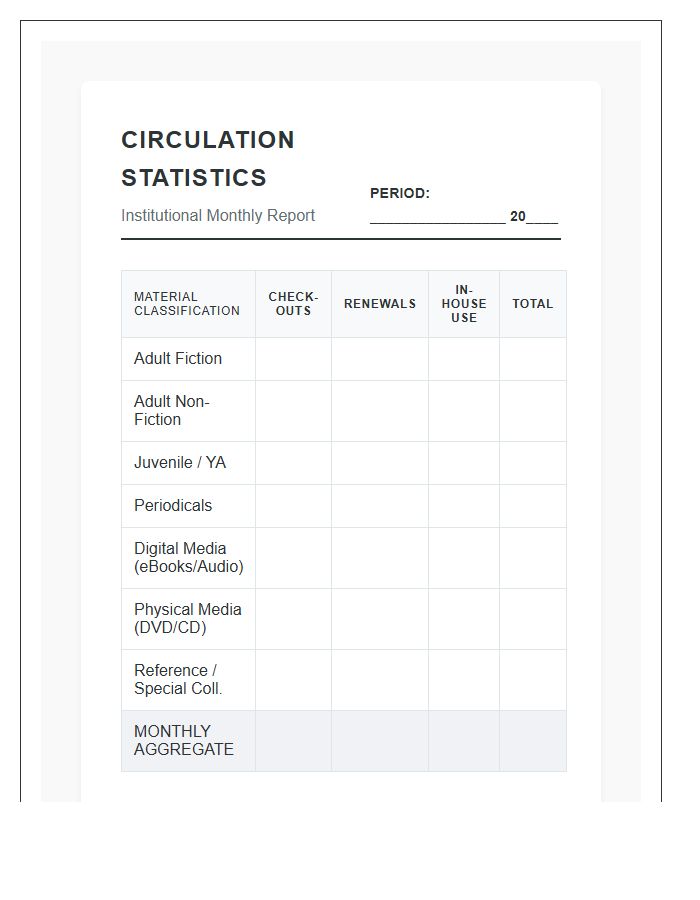
Tracking your library's growth is easy with a Monthly Library Circulation Statistics Printable Chart. This essential tool helps you visualize borrowing trends, identify popular genres, and justify budget requests. It solves the problem of messy data by providing a clear, professional layout for record-keeping. Use it to streamline your reporting and demonstrate the vital impact your collection has on the community every single month.
School Library Book Circulation Graph Printable Chart
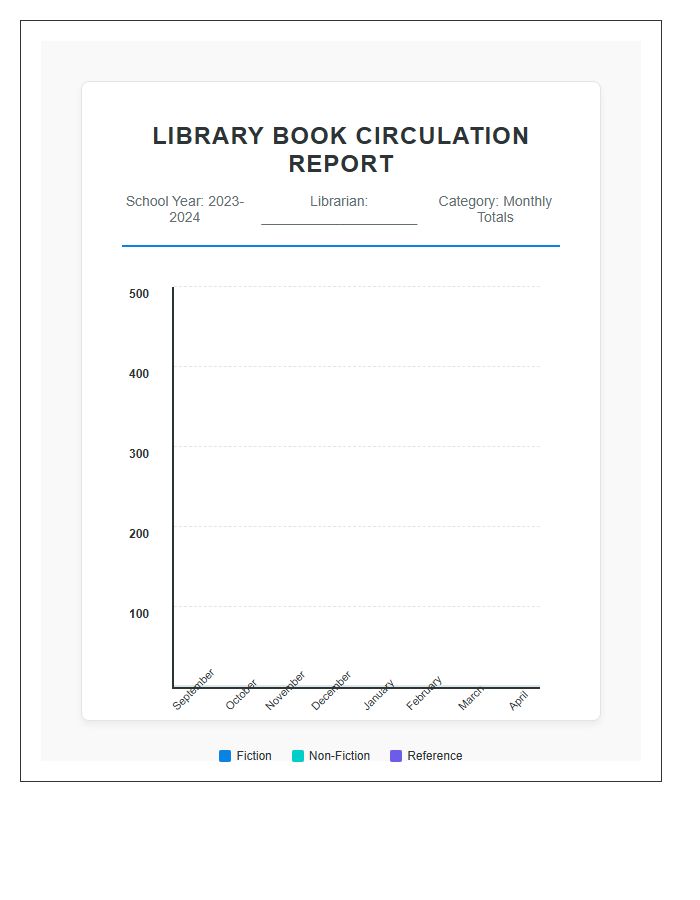
Tracking reading trends is effortless with a School Library Book Circulation Graph Printable Chart. This visual tool solves the problem of messy data by providing a clear way to monitor student engagement and genre popularity. It is incredibly useful for justifying budget requests or planning library displays. Use this simple chart to turn complex statistics into easy-to-read insights that help improve your school's reading culture daily.
Public Library Circulation Data Printable Chart
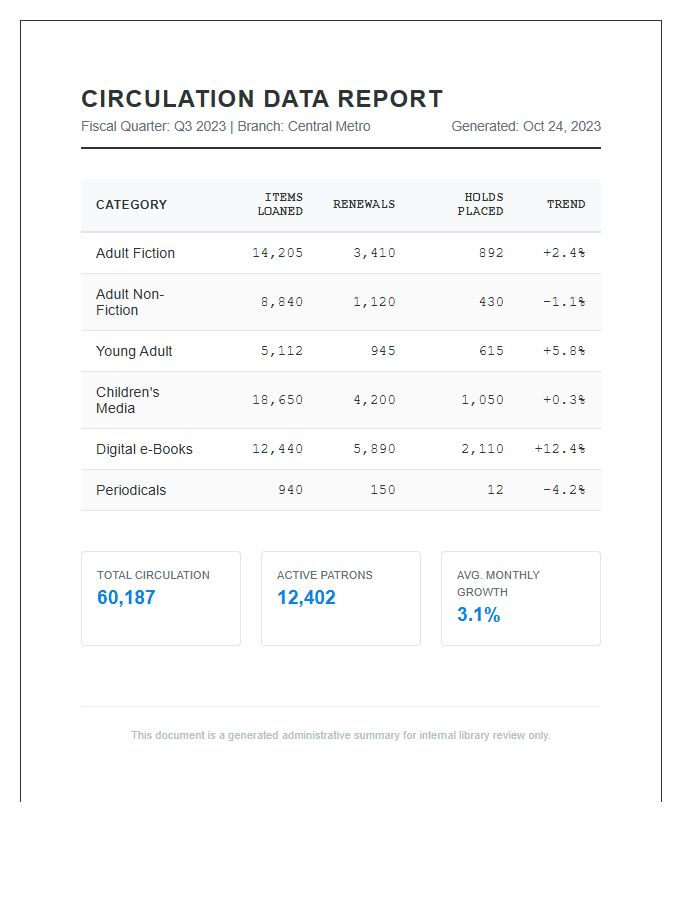
A Public Library Circulation Data Printable Chart is the perfect tool to track reading trends effortlessly. By visualizing borrow rates, you can optimize collection management and justify funding requests with ease. It simplifies complex statistics into a clear format, helping staff solve inventory gaps. Use this simple resource to showcase your library's community impact and make data-driven decisions that improve local service quality every single day.
Library Material Circulation Trends Printable Chart
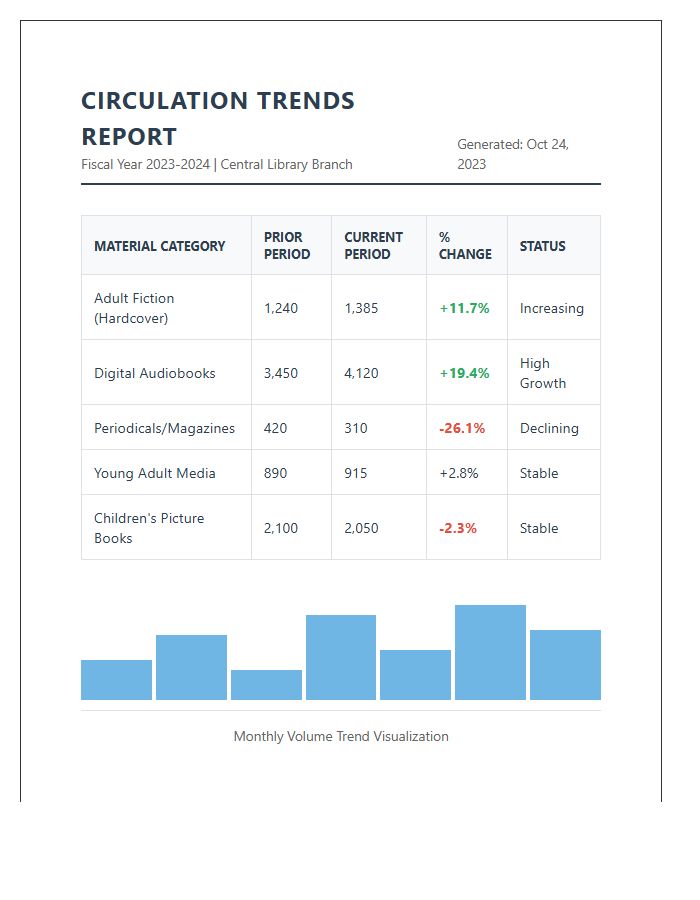
Tracking your collection is easier with a Library Material Circulation Trends Printable Chart. This tool solves the problem of cluttered data by offering a visual overview of book popularity. It is incredibly useful for making smart purchasing decisions and optimizing shelf space. Use this printable to identify exactly what your patrons love, ensuring your library remains a relevant, high-demand resource for the entire community.
Kids Library Book Circulation Statistics Printable Chart
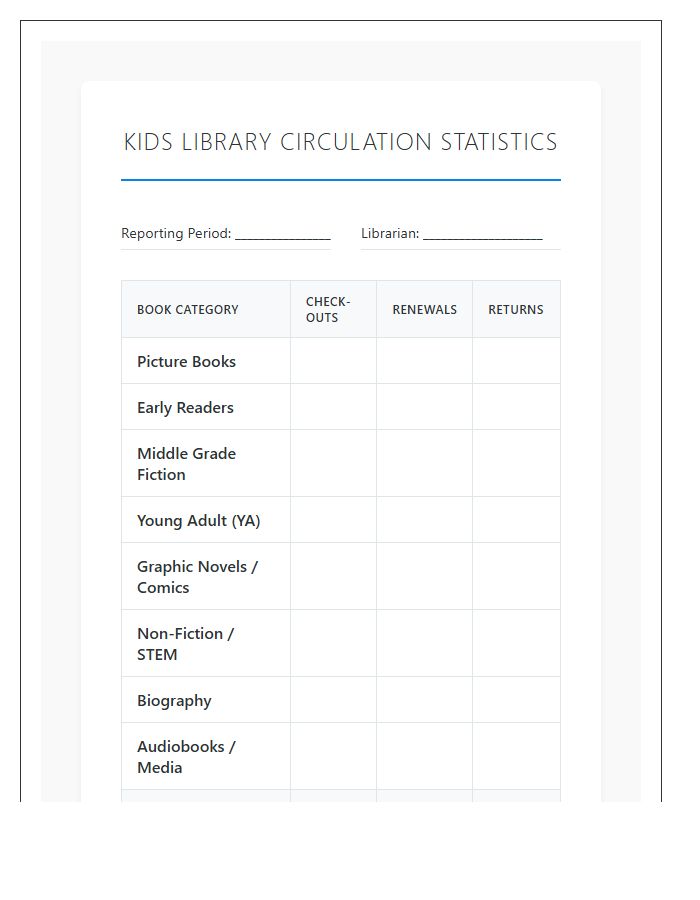
Tracking your child's reading journey is easy with a printable circulation chart. This tool solves the problem of forgotten due dates and lost titles. It is incredibly useful for building consistent reading habits and organizing library trips. Simply download, print, and post it on your fridge to see their progress at a glance while ensuring every book returns on time without any late fees.
Classroom Library Circulation Tracking Printable Chart
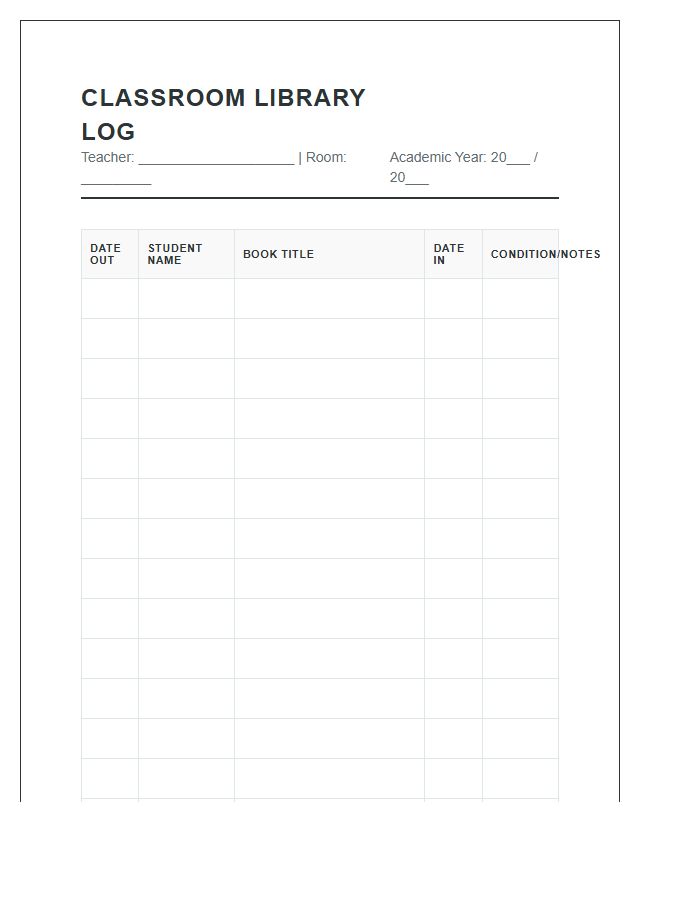
Keeping books organized is easy with a Classroom Library Circulation Tracking Printable Chart. This simple tool solves the problem of missing books by recording every checkout instantly. The main advantage is accountability, ensuring your personal collection stays complete. It helps students practice responsibility while saving you money on replacements. Just print it out, hang it by your shelves, and enjoy a stress-free, managed reading nook.
Library Circulation Performance Statistics Printable Chart
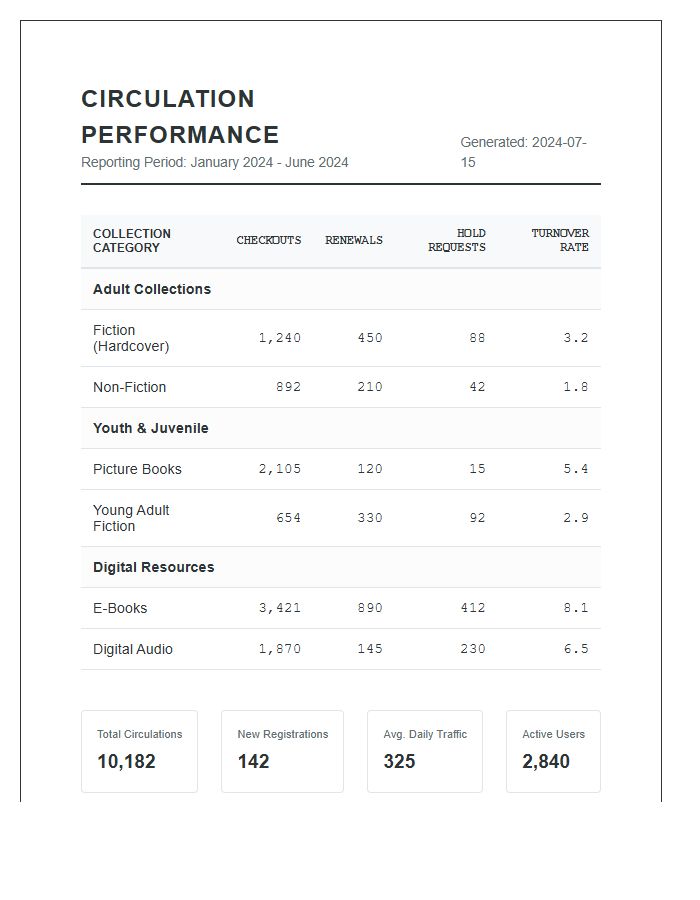
Tracking your library's success is easier with a Library Circulation Performance Statistics Printable Chart. This tool provides a clear visual of resource engagement, helping you solve inventory gaps and justify budget requests. By documenting checkouts and returns, you gain actionable data to optimize your collection. It is the most practical way to monitor growth and improve community service through simple, organized record-keeping.
Weekly Library Book Circulation Statistics Printable Chart
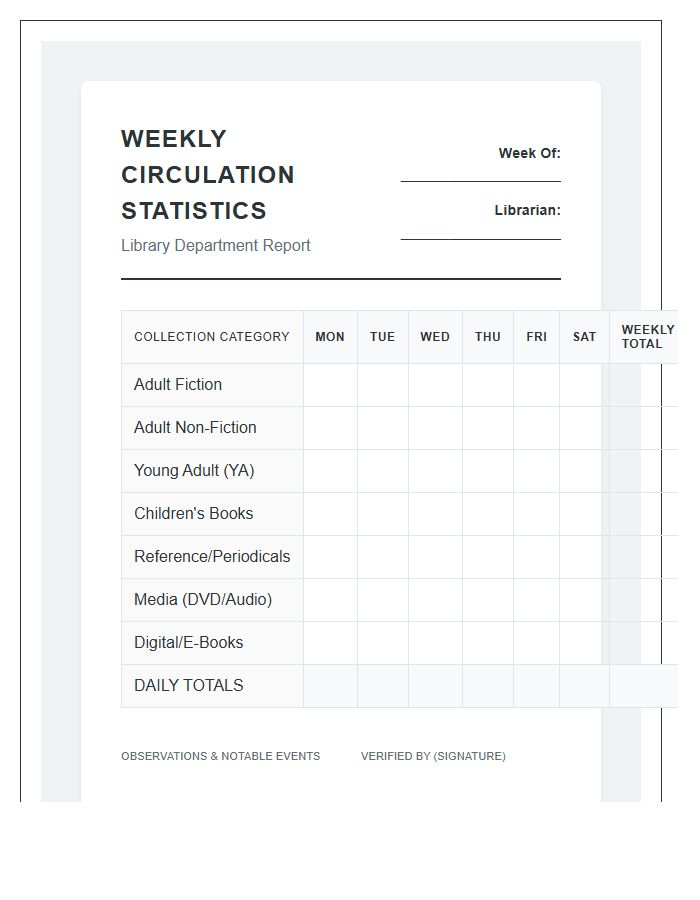
Managing your collection is easier with a Weekly Library Book Circulation Statistics Printable Chart. This simple tool helps you track borrowing trends and identify popular genres instantly. By visualizing your data, you can solve inventory gaps and make smarter purchasing decisions. It is the most efficient way to improve your library's organization and ensure your readers always find exactly what they need every week.
Academic Library Circulation Statistics Printable Chart
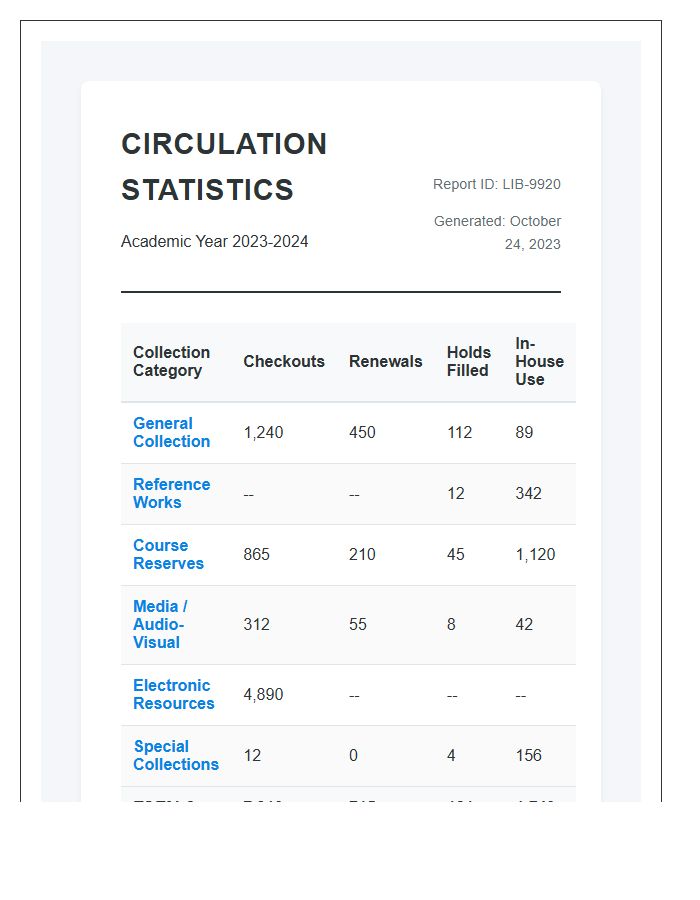
An Academic Library Circulation Statistics Printable Chart is the ultimate tool for tracking resource usage effectively. It simplifies data collection, helping librarians identify popular subjects and justify budget requests. By visualizing trends on paper, you can quickly solve reporting hurdles and optimize your collection to better serve students. It is a practical, low-tech solution for high-impact data management in any educational setting.
Detailed Library Book Circulation Statistics Printable Chart
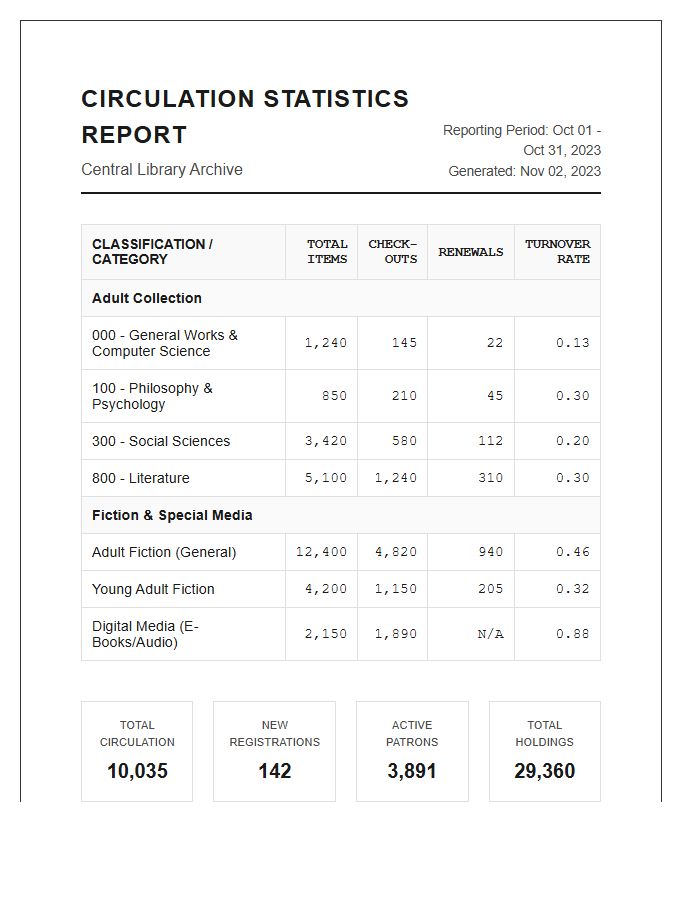
Tracking your library collection has never been easier. Use a Detailed Library Book Circulation Statistics Printable Chart to visualize borrowing trends and identify popular genres instantly. This tool is essential for optimizing your budget and ensuring your shelves stay relevant. It solves the problem of manual guesswork by providing clear data, helping you make informed decisions to improve your library's overall performance and user satisfaction.
Library Circulation Inventory Statistics Printable Chart
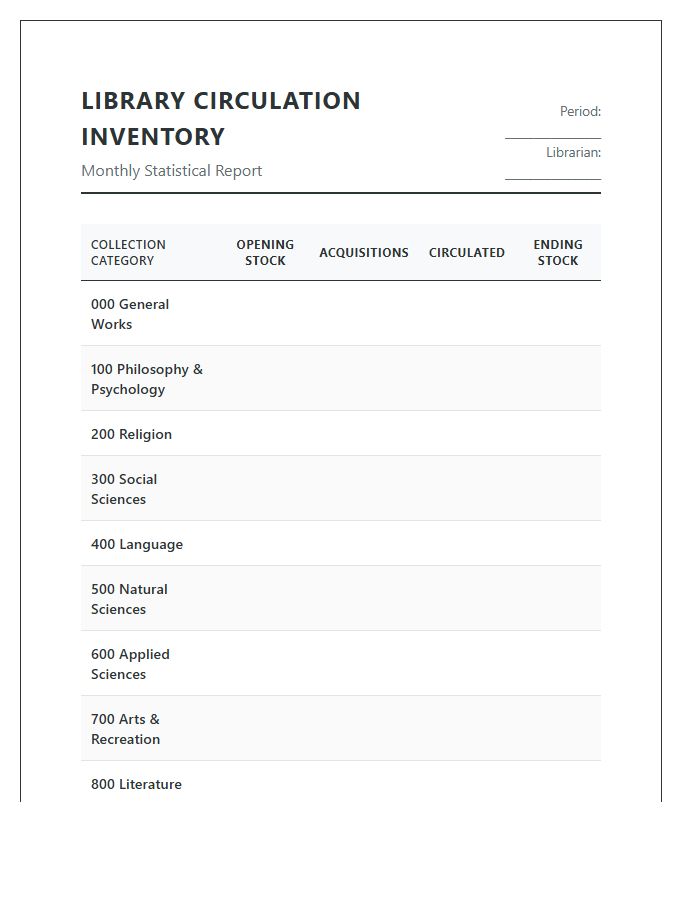
Keeping your collection organized is easy with a Library Circulation Inventory Statistics Printable Chart. This essential tracking tool helps you monitor book turnover and identify popular genres instantly. By visualizing data on paper, you solve the problem of digital clutter and ensure accurate reporting. It is a simple, effective way to optimize your shelf space and improve resource management for any library size.
Library Book Circulation Comparison Statistics Printable Chart
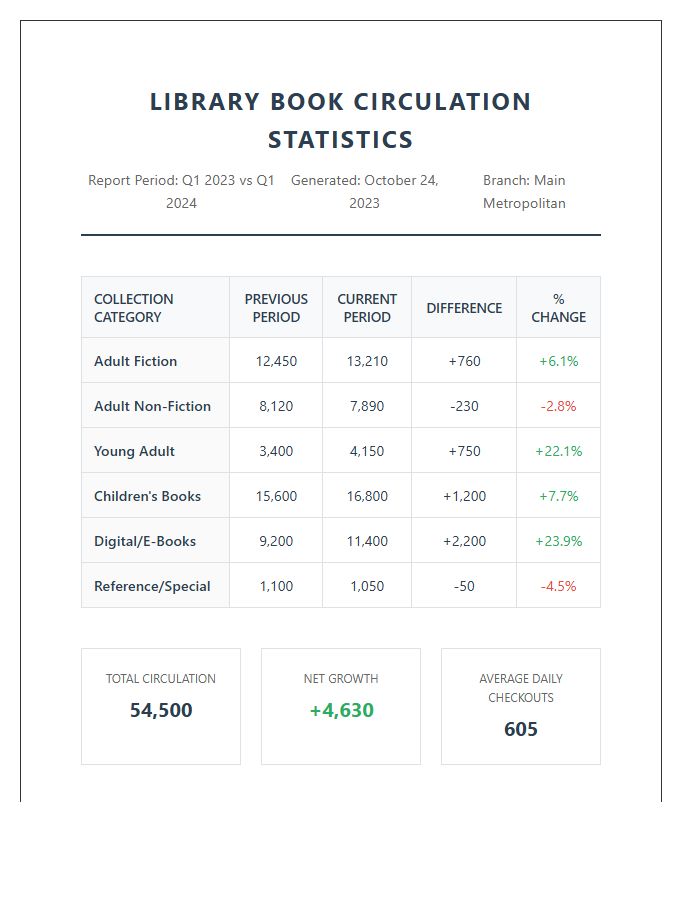
A Library Book Circulation Comparison Statistics Printable Chart is essential for tracking performance. It offers a visual overview of checkout trends, helping you solve inventory gaps and justify budget requests. By comparing monthly data, you gain the advantage of making data-driven decisions to optimize your collection and better serve your community's reading habits with ease.
Youth Library Book Circulation Statistics Printable Chart
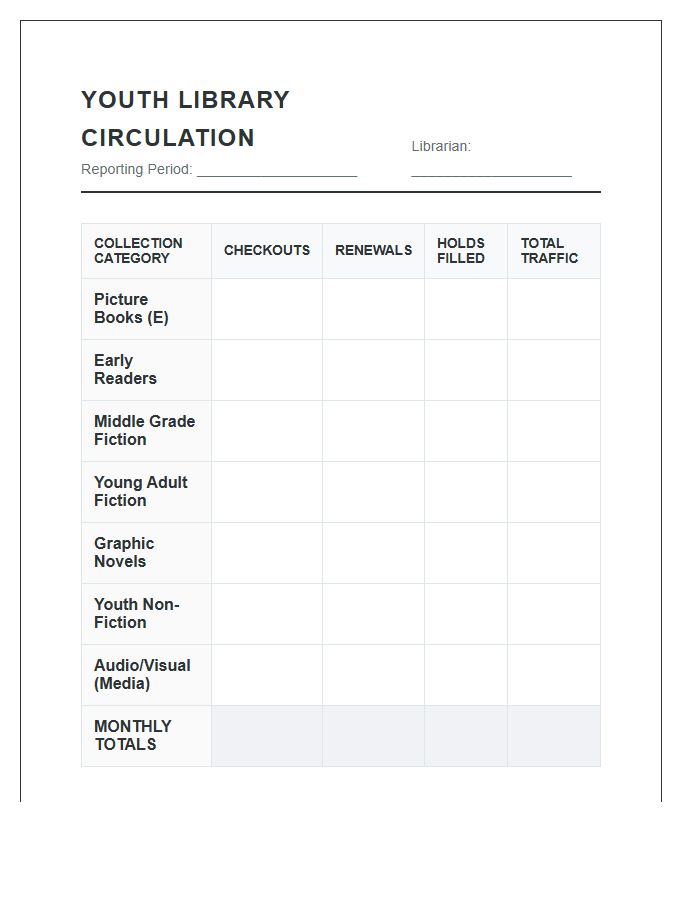
Track literacy growth effortlessly with a Youth Library Book Circulation Statistics Printable Chart. This tool solves the problem of messy data by providing a visual overview of reading trends. It is incredibly useful for librarians and educators to identify popular genres and justify budget requests. Use this simple resource to monitor engagement and ensure your collection perfectly meets the evolving needs of young readers.
Regional Library Circulation Statistics Printable Chart
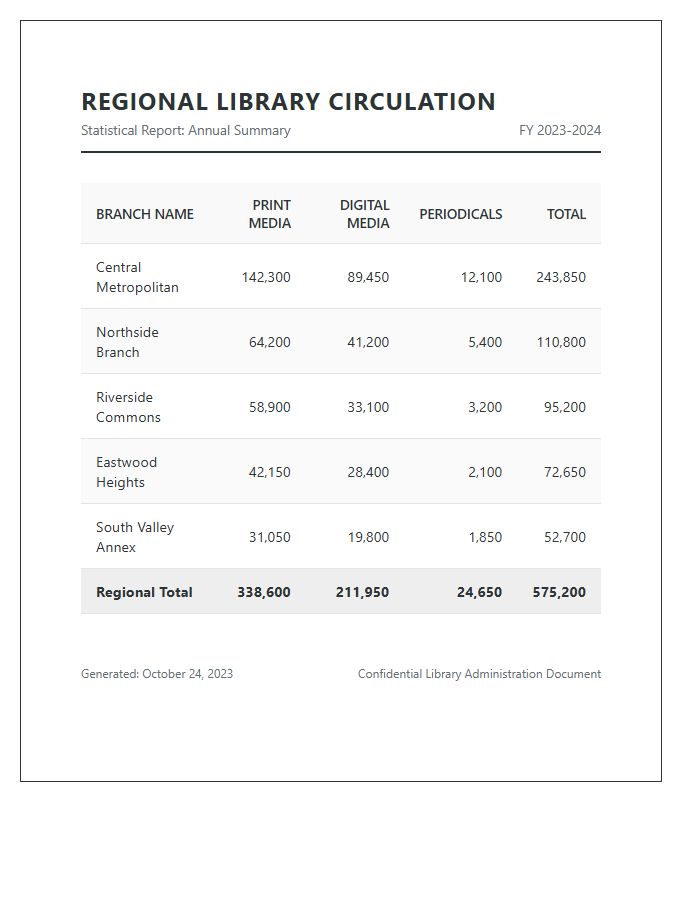
Tracking a Regional Library Circulation Statistics Printable Chart is the best way to visualize community engagement. This tool solves the problem of messy data by organizing book loans and digital checkouts into a clear format. It is incredibly useful for spotting reading trends and securing future funding. Having a physical reference helps staff make smarter collection decisions and improves local library services for everyone involved.
Digital Library Circulation Statistics Printable Chart
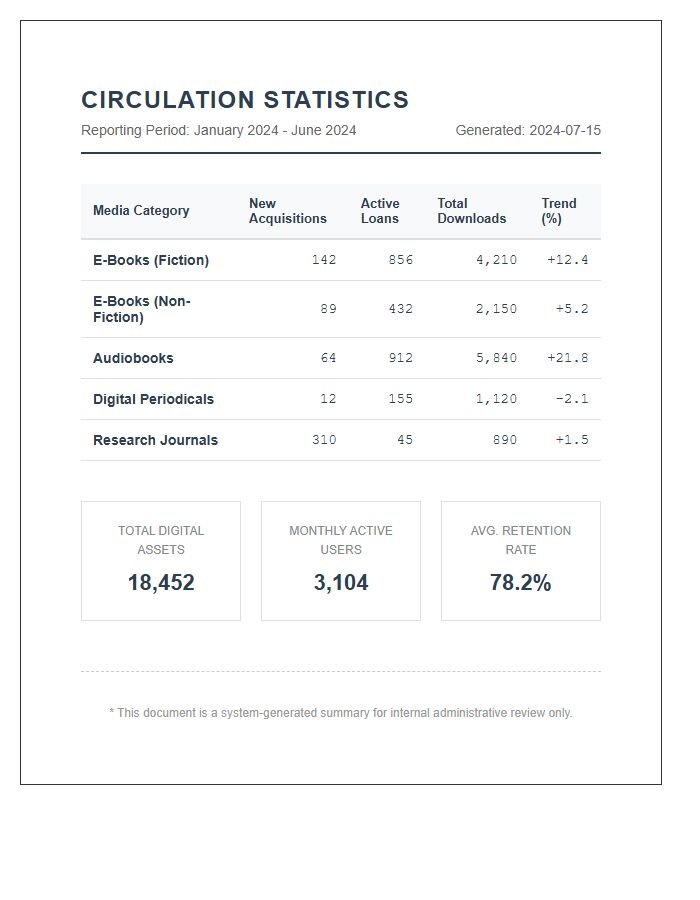
A Digital Library Circulation Statistics Printable Chart is your best tool for tracking engagement. It solves the problem of messy data by providing a clear visual snapshot of book loans and downloads. This is incredibly useful for reporting growth to stakeholders or identifying popular genres. Use these charts to simplify your workflow and make data-driven decisions that improve your collection's impact effortlessly.
Library Book Circulation Growth Statistics Printable Chart
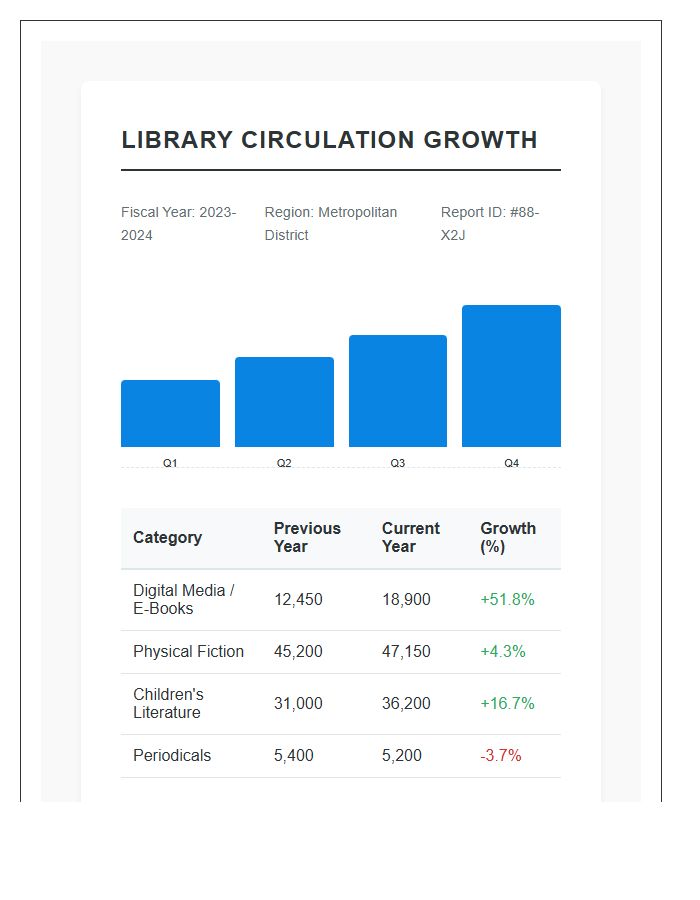
Tracking your library's success is easier with a Library Book Circulation Growth Statistics Printable Chart. This tool solves the problem of messy data by providing a clear visual layout to monitor lending trends. It is incredibly useful for justifying budget increases or planning new collections. Use this printable to transform complex numbers into a simple, professional report that highlights your community's growing engagement and reading habits.
Local Library Circulation Statistics Printable Chart
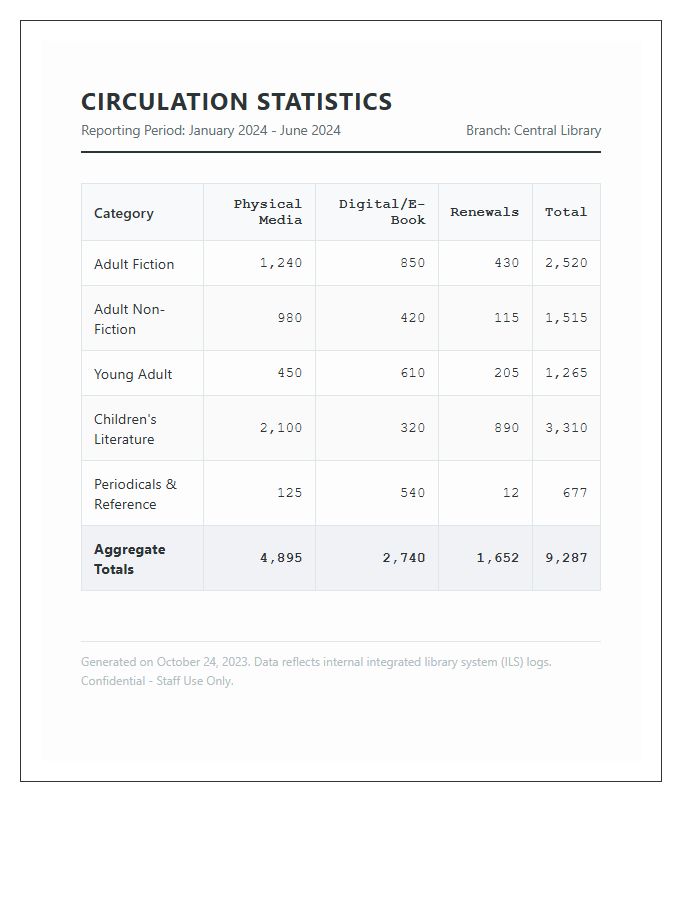
Tracking a Local Library Circulation Statistics Printable Chart is the best way to visualize community engagement. This tool simplifies data management by solving the problem of cluttered records. It offers the advantage of seeing book trends at a glance, making it incredibly useful for budget planning and collection development. Stay organized and demonstrate your library's value with clear, professional visual reports today.
Elementary Library Circulation Statistics Printable Chart
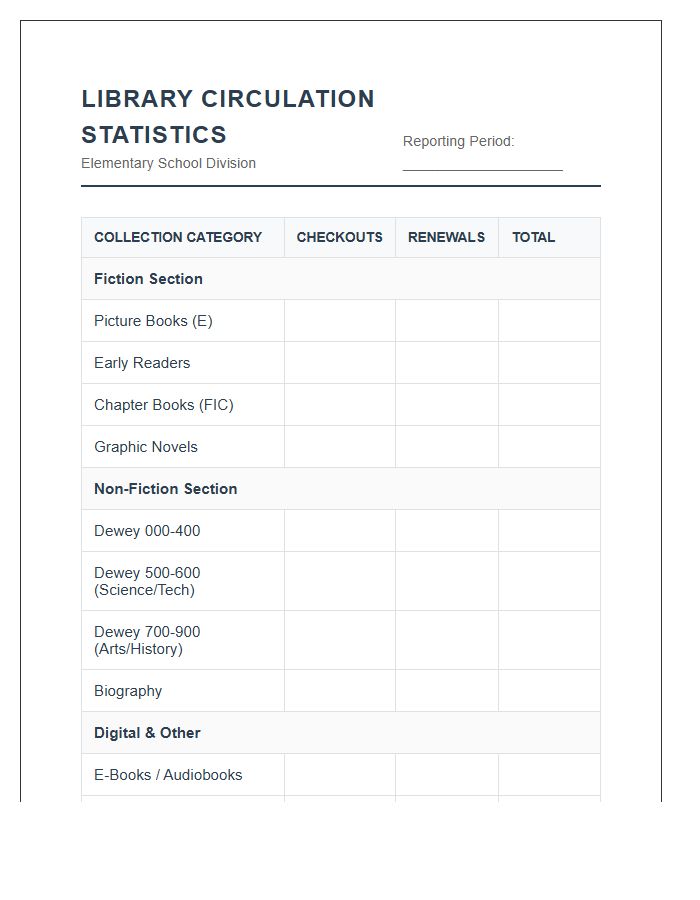
Tracking book trends is easy with an Elementary Library Circulation Statistics Printable Chart. This simple tool helps librarians visualize student interests and manage inventory effectively. By recording monthly checkouts, you can justify budget requests and improve collection development. It's the perfect way to solve organizational chaos while ensuring your library stays relevant and engaging for young readers every single day.
Professional Library Circulation Statistics Printable Chart
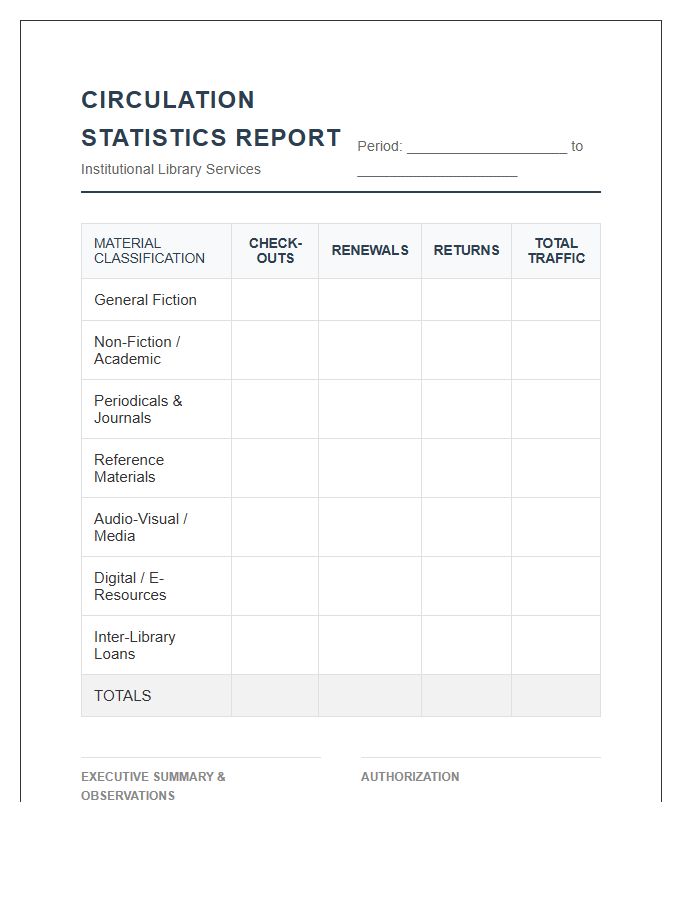
Keeping track of book loans is easier with a Professional Library Circulation Statistics Printable Chart. This tool solves the problem of messy data by providing a structured layout to monitor daily or monthly trends. It's incredibly useful for identifying popular genres and justifying budget increases. Simply print the template to gain clear insights into your collection's performance and ensure your library resources meet community needs efficiently.
Quarterly Library Book Circulation Statistics Printable Chart
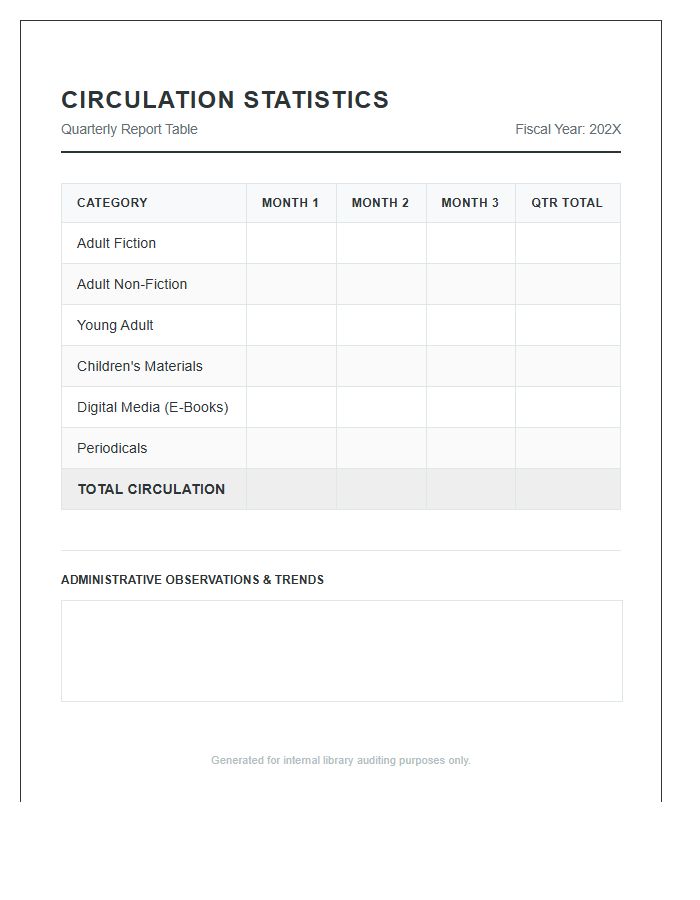
Tracking your collection's performance is easy with a Quarterly Library Book Circulation Statistics Printable Chart. This essential tool helps you visualize seasonal reading trends and manage inventory effectively. By organizing data into clear quarterly snapshots, you can solve the problem of overstocking underperforming genres. It is a simple, practical way to prove your library's value and make smarter purchasing decisions for your community.
How can I use a printable library book circulation statistics graph chart to track monthly lending?
You can use this printable chart to visually record monthly checkouts by plotting total circulation numbers on the vertical axis and months on the horizontal axis. This provides a clear overview of seasonal reading trends and peak library usage periods throughout the year.
What key metrics should be included on a library circulation statistics tracker?
An effective circulation tracker should include fields for total checkouts, renewals, new library card registrations, and a breakdown by category, such as adult fiction, non-fiction, and children's media, to help analyze collection performance.
Why is a visual graph chart better than a spreadsheet for library reporting?
A visual graph chart simplifies complex data, making it easier for stakeholders and board members to quickly identify growth patterns, budget needs, and circulation spikes that might be missed when looking at raw numerical spreadsheets.
Where can I find a free printable template for tracking library book circulation?
Free printable templates are often available through professional library associations, educational resource sites, and data visualization blogs that offer PDF or Excel-based charts specifically designed for school and public library reporting.
How often should library circulation data be updated on a printed chart?
For the most accurate reporting, circulation data should be updated at the end of every month. This allows the librarian to maintain a consistent annual record and prepare year-end reports that demonstrate the library's impact on the community.
Note: Sometimes the .PDF file interface can be slightly different from the image preview. Our apology for this inconvenience.


Comments